- Global
- 2026.03.10
Where Tradition Meets Innovation: Products and Technologies That Will Shape the Future Vol.1 Redefining Heat Control – THERMOEYE: The Heat-Reflective Coating That Challenged Market Norms
SHARE


As abnormal weather events become increasingly prevalent worldwide, environmental stewardship has become an unquestionably important priority in Nippon Paint Group’s business operations. A product that clearly reflects this commitment is our heat-reflective coating, THERMOEYE. Since its introduction in 2009, THERMOEYE has been extensively applied to the roofs and exterior walls of single-family homes, factories, and warehouses, contributing to energy savings, reduced power consumption, and lower CO2 emissions.
Driven by a Vision: “Repainting Energy Roof Across Japan with Heat-Reflective Coatings”
As global warming continues to drive average temperatures higher, industries across the economy have been compelled to take meaningful countermeasures. Within the coatings industry, demand for heat-reflective performance began to rise markedly in the early 2000s. Against this backdrop, Nippon Paint Group developed THERMOEYE as an environmentally conscious heat-reflective coating designed to address this emerging need.
Full-scale development commenced in the late 2000s, a period during which the market for heat-reflective roof coatings was expanding rapidly amid heightened public awareness of environmental challenges. Looking back, a member of the product planning team recalls, “This is only my personal impression, but the market was growing by roughly 130%, and at times approaching 150% year on year.”
At the time, Nippon Paint already offered a roof coating known as Fine Silicon Best, which included heat-reflective performance as an optional feature. However, the product was primarily positioned for residential applications, while market demand was increasingly shifting toward broader use cases, including factories and warehouses. In response, the team embarked on the development of a new product with heat-reflective performance as its defining core. Reflecting on their motivation, the team member adds, “We were sincerely determined to repaint roofs across Japan with heat-reflective coatings and, even in a small way, contribute to curbing global warming.”

Finding Clues to the Solution at the Application Site
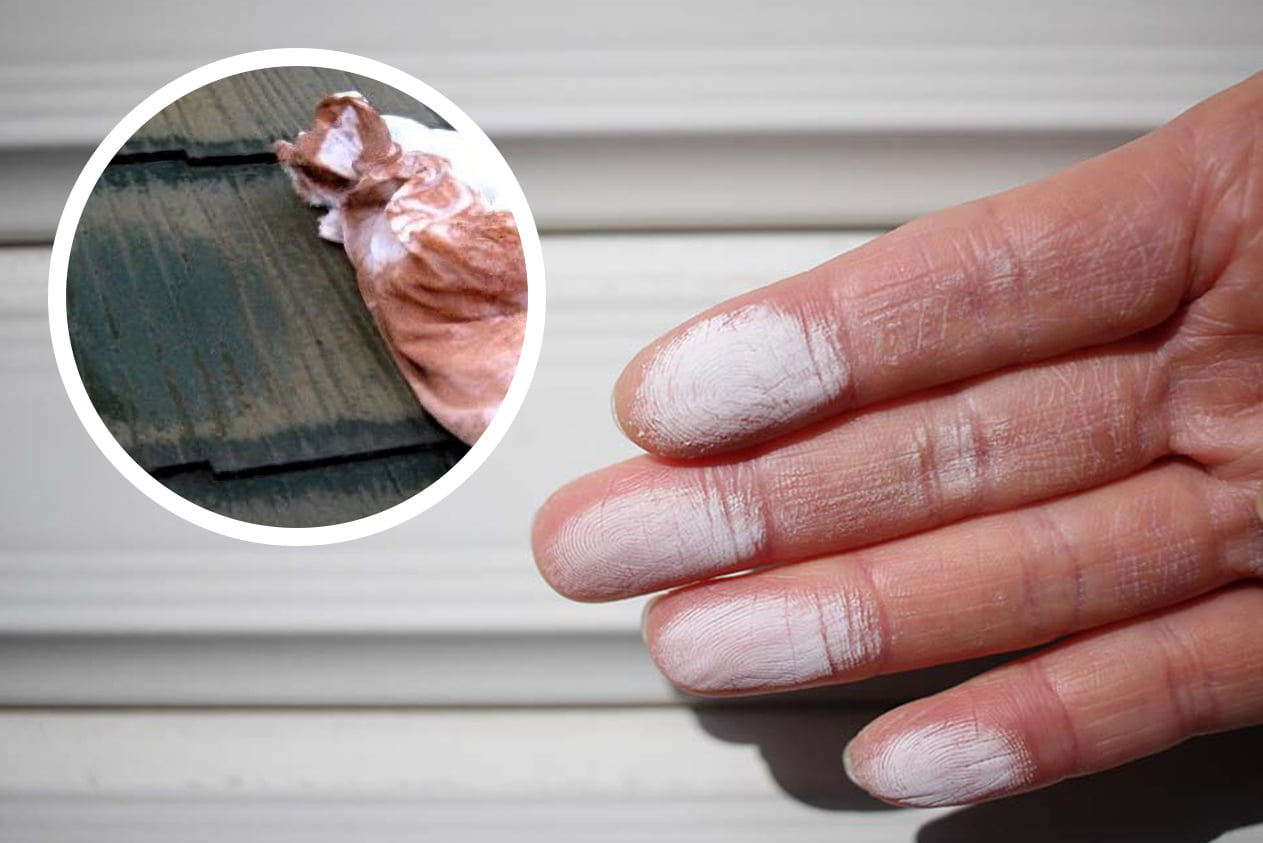
During the development process, the team first turned its attention to enhancing weather resistance. Heat-reflective coatings require specialized tinting, which in conventional products often resulted in compromised durability. A critical insight emerged from an on-site application, where a member of the development team observed the coating film deteriorating under prolonged exposure to ultraviolet radiation, wind, and rain. As a result, a colored powder appeared on the surface – a phenomenon known as chalking. This firsthand observation prompted the team to consider pigments as a potential root cause and underscored the importance of careful pigment selection. Of particular concern was the fact that this chalking was occurring significantly earlier than the coating’s expected service life.
To address this challenge, the team conducted a detailed examination of the optical properties of individual pigments and their impact on weather resistance, working to identify the most effective pigment combinations. Test samples were produced repeatedly and subjected to accelerated weathering evaluations using equipment that simulates outdoor conditions - including sunlight, temperature, humidity, wind, and rain – to assess the extent of coating film degradation.
Through this iterative process, the team determined that pigment combinations exert a decisive influence on both the weather resistance of the coating film and its infrared transmittance This discovery not only resolve the durability issues encountered during development, but also led to the creation of our proprietary infrared transmission technology, which enhances solar reflectance performance.
The Key to Enhanced Heat-Reflective Performance: “Double Reflection and Infrared Transmission Technology”
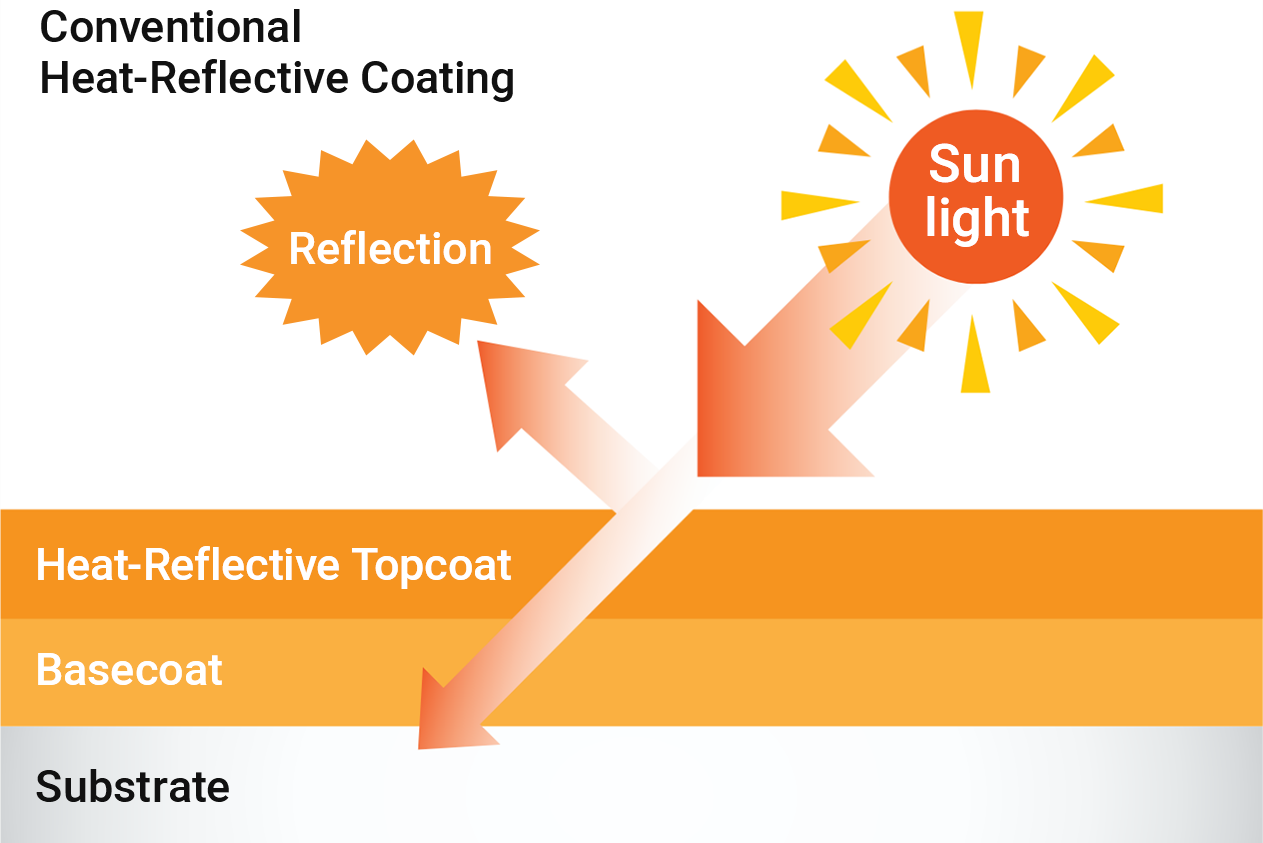
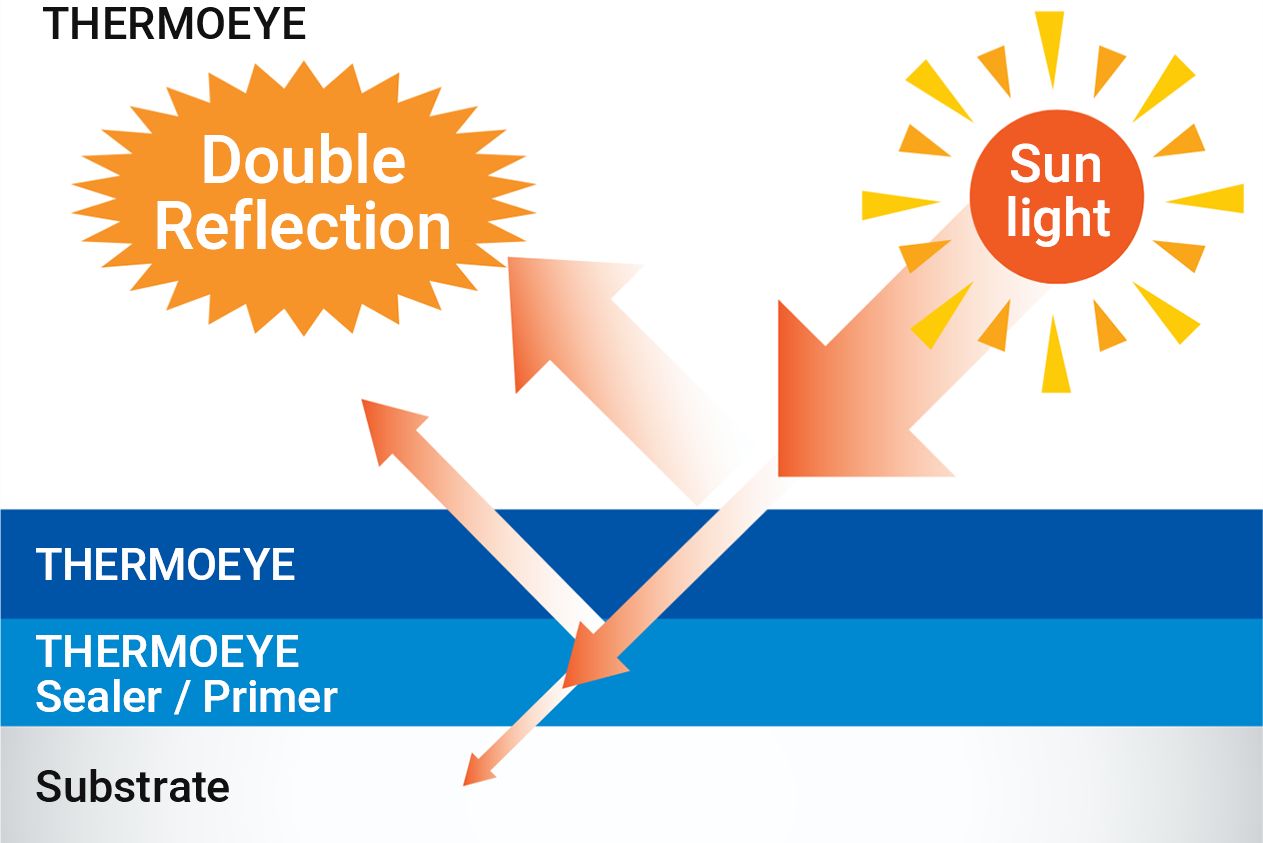
The most distinctive feature of THERMOEYE lies in its ability to efficiently reflect infrared rays – the primary cause of temperature rise – through its proprietary double reflection technology. This performance is achieved by a multilayer coating structure composed of a topcoat and a basecoat. Conventional black roof coatings generally offer reflectance of only about 5% in the infrared wavelength range; by contrast, THERMOEYE achieves reflectance exceeding 60%, even in black.
To further maximize heat-shielding performance, THERMOEYE incorporates infrared transmission technology. This technology allows infrared rays that cannot be reflected by the topcoat to pass through with minimal absorption, enabling them to be effectively reflected by the white basecoat beneath. The interaction between these layers significantly enhances overall performance. When solar energy is absorbed, it is converted directly into heat. In seeking to maximize heat-shielding performance, the development team concluded that effective thermal control could not be achieved with a single coating layer alone. Instead, they conceived a multilayer approach that reflects sunlight across multiple layers. This double reflection and infrared transmission technology is the result of the team’s relentless pursuit of the optimal solution for heat-reflective coatings.
A Rich Color Lineup That Transformed the Market
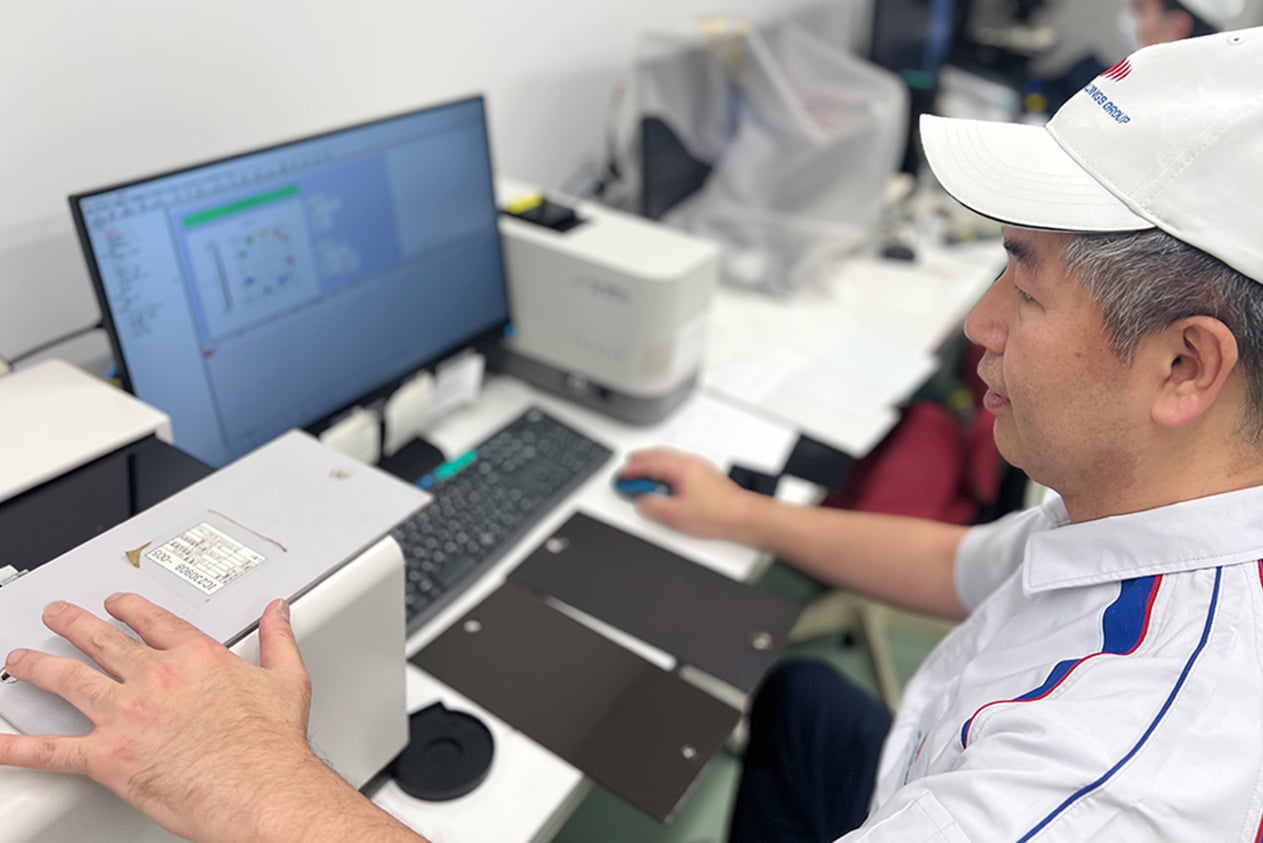
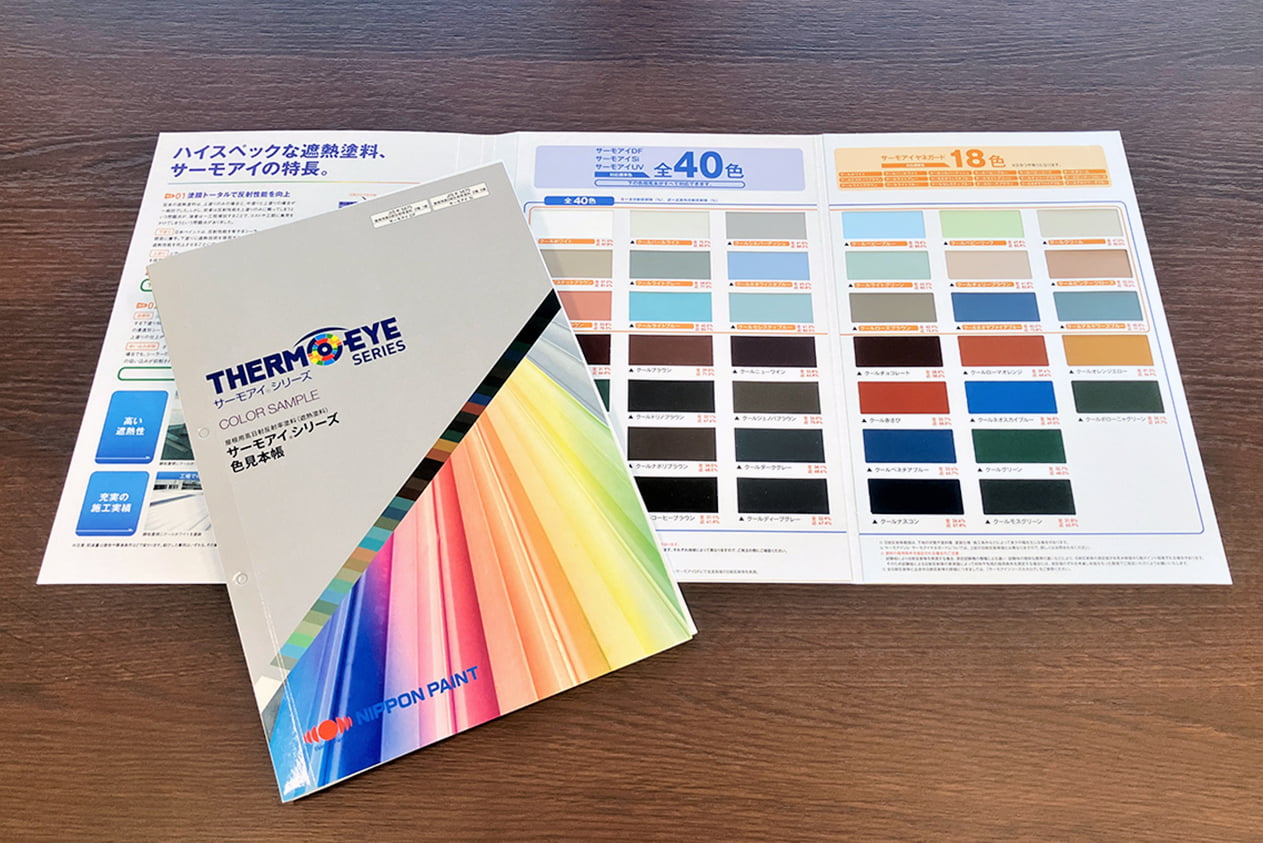
Until recently, dark colors have dominated the roof coatings market. However, the introduction of a 40-color lineup spanning light to dark shades – together with the innovative concept of using highly reflective white as the basecoat – made a strong impact across the industry. With the launch of THERMOEYE, demand for light-colored, high-reflectance coatings expanded rapidly, driving a significant shift in market preferences. The creation of this extensive color lineup was made possible by the dedication of our color-matching specialists. Color matching is the process of formulating coatings to achieve precise color and gloss, and these specialists possess the exceptional ability to distinguish tens of thousands of colors by eye. While the transition to new non-conventional color-matching methods initially presented challenges, they quickly mastered the required techniques by drawing on their deep expertise. Their efforts enabled us to deliver a diverse color lineup that responds to the increasingly varied needs of the market.
Data-Backed Results That Capture User Confidence
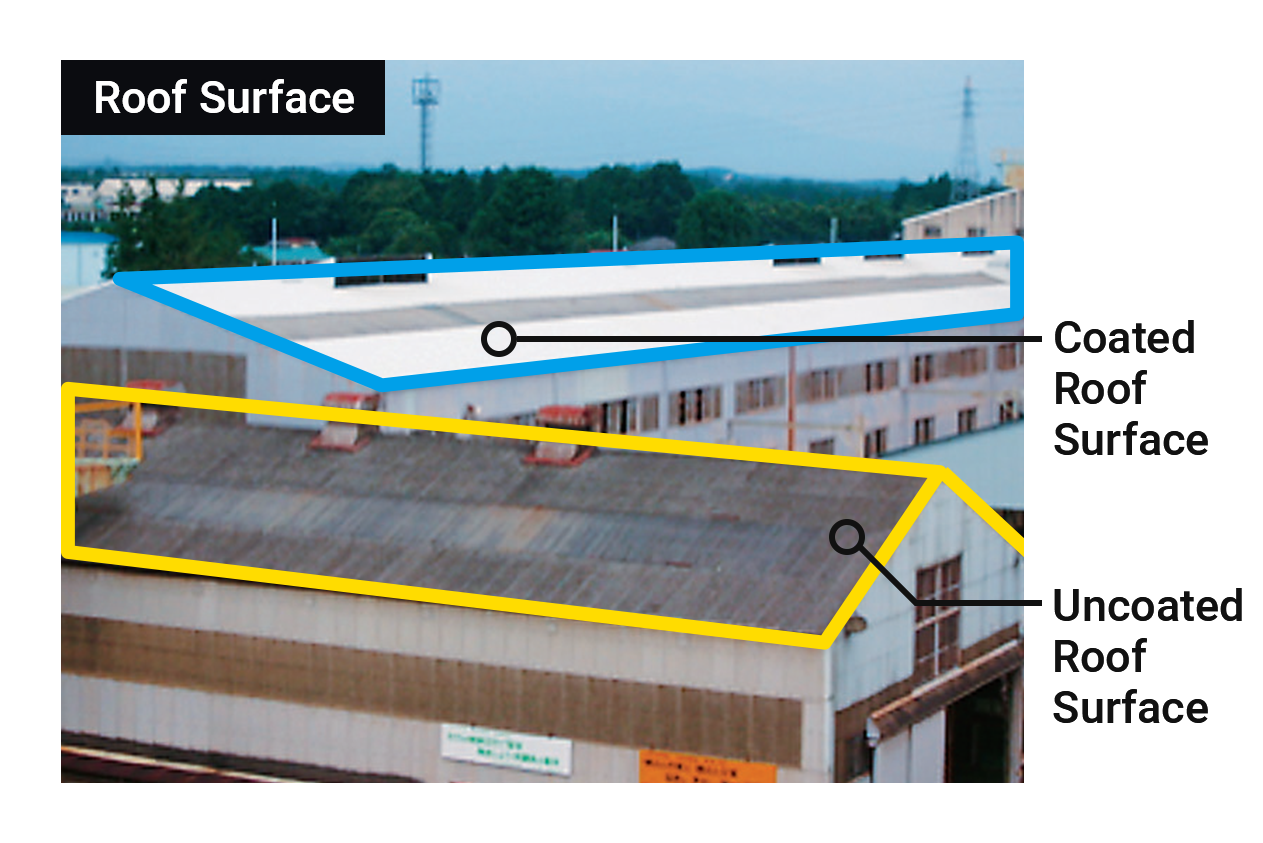
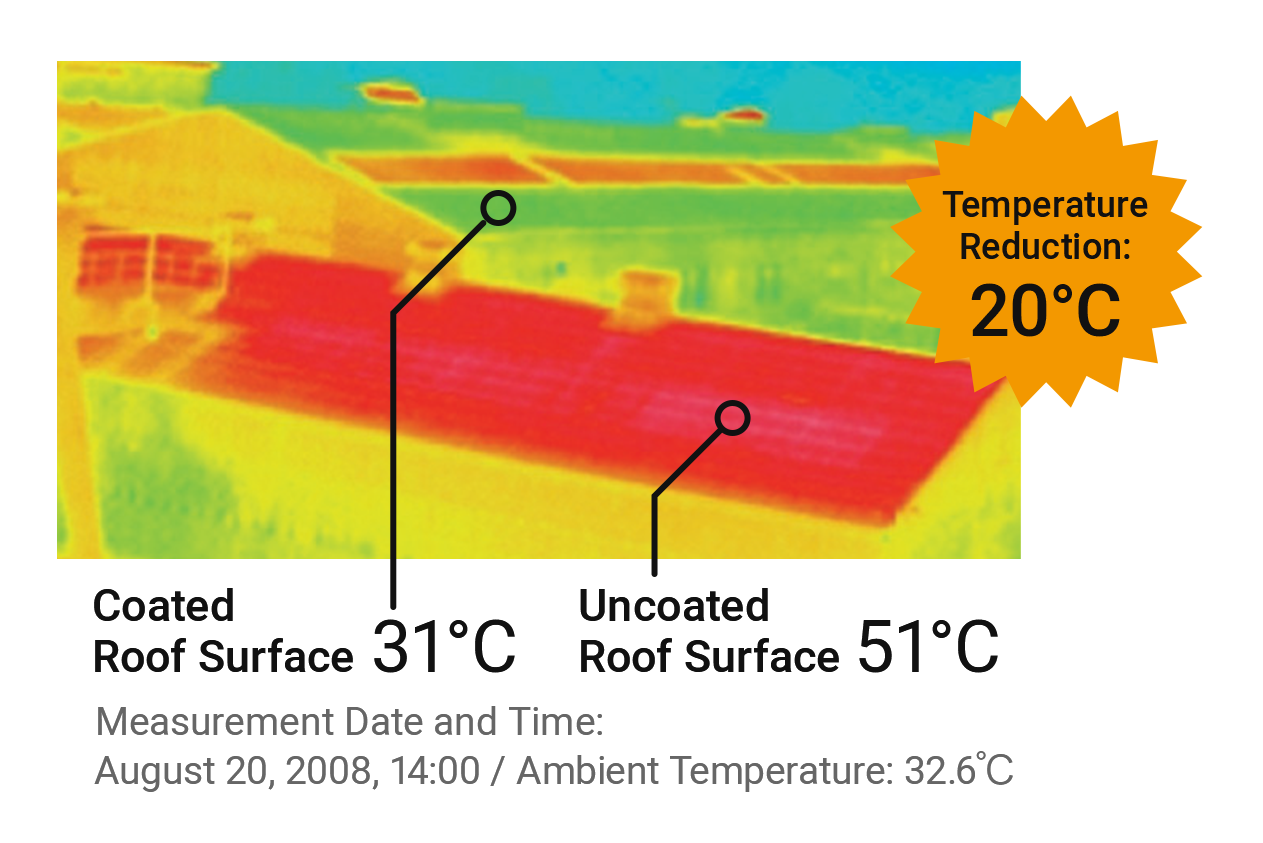
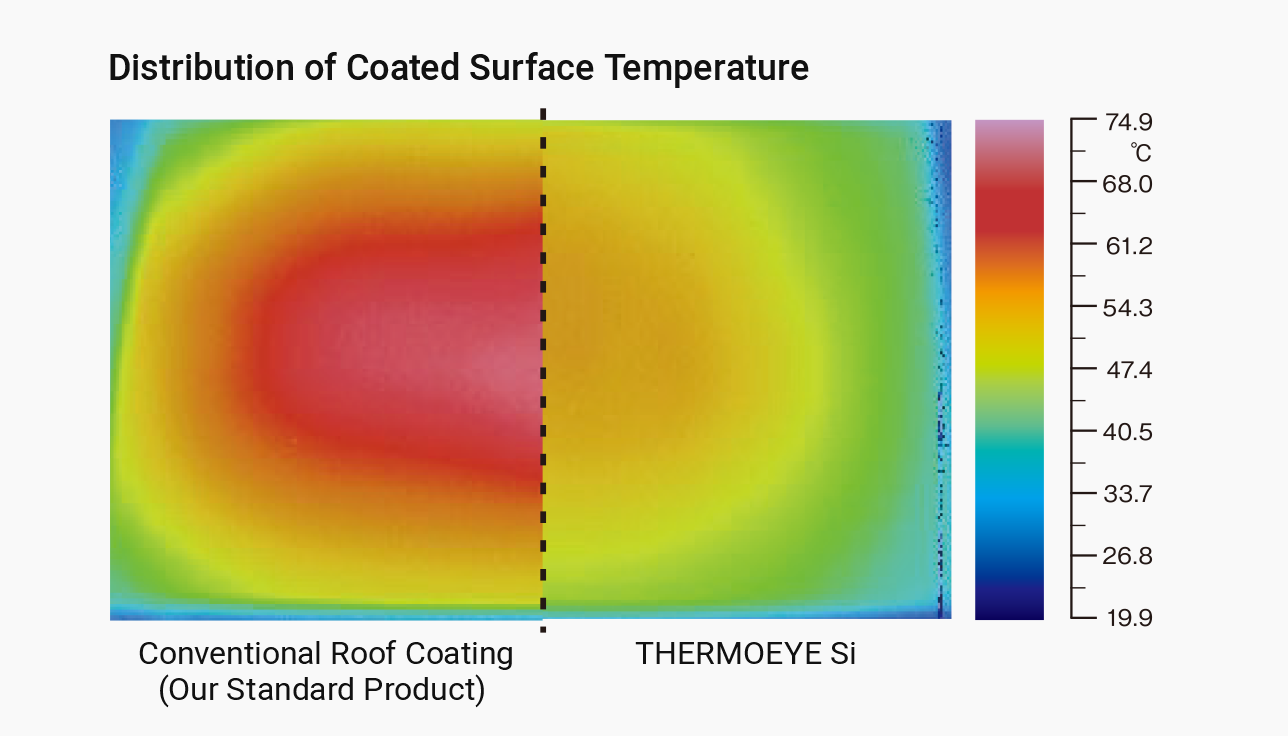
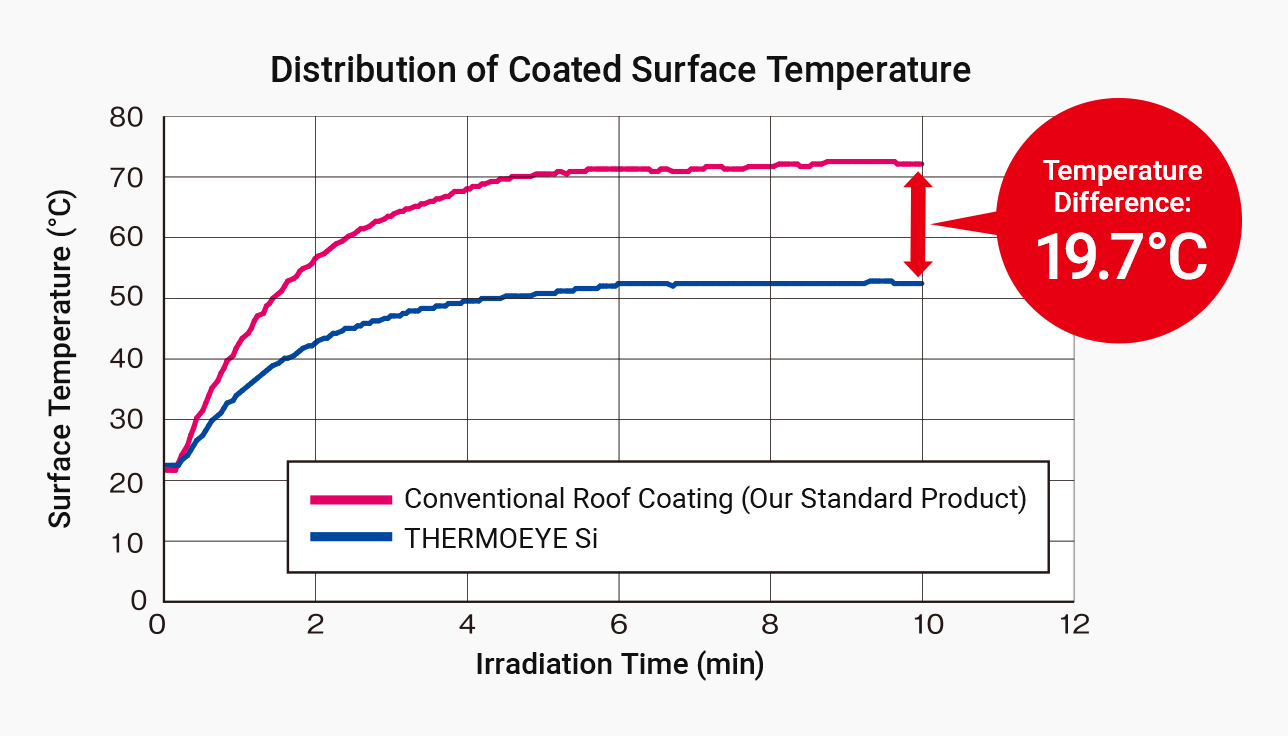
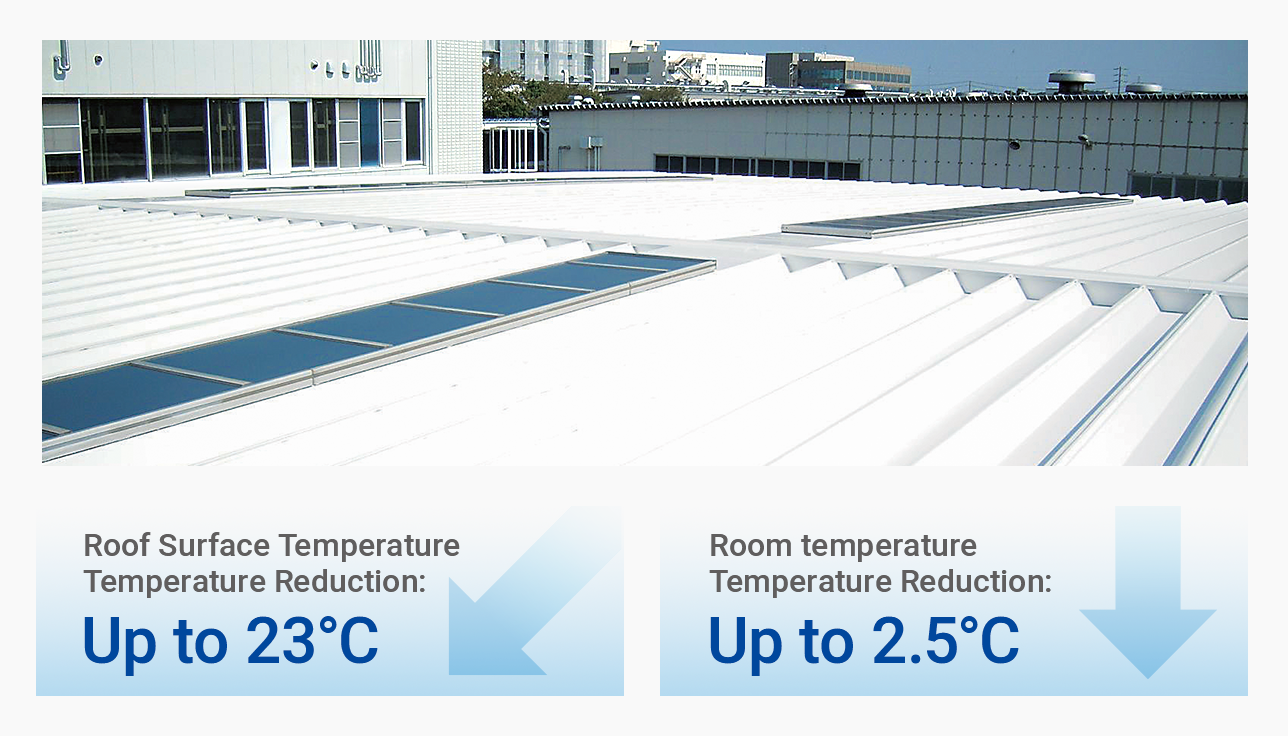
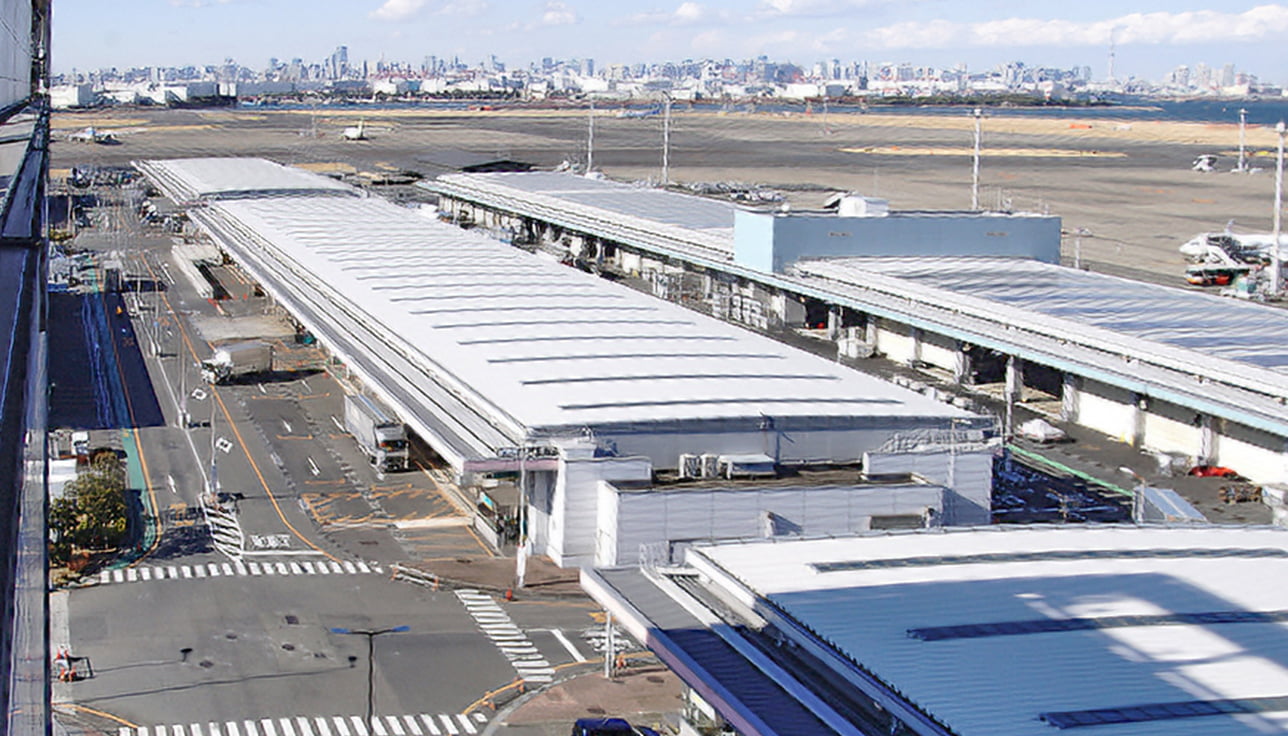
Following extensive trial and refinement, the heat-reflective coating THERMOEYE was launched in 2009. Since then, it has been applied to a broad range of structures – including single-family homes, factories, and warehouses – contributing to energy savings, reduced power consumption, and improved indoor comfort. In factory applications, roof surface temperatures have been reduced by approximately 20°C, while indoor temperatures have fallen by up to 2.5°C. In residential settings, electricity costs have been lowered by roughly 30%. Across numerous projects, the effectiveness of THERMOEYE has been quantitatively verified.
More than a decade after its launch, THERMOEYE has become the product most readily associated with roof coatings among distributors and contractors. With the acquisition of JIS certification, it has earned strong and enduring trust in the market. Moreover, following the June 2025 revision to Japan’s Industrial Safety and Health Regulations, which made heatstroke countermeasures mandatory, expectations for THERMOEYE are rising as a practical solution for creating safer and more comfortable working environments in factories and similar facilities.
As a product that contributes to reducing environmental impact, THERMOEYE is attracting growing interest from a wide range of industries that operate factories and warehouses, including manufacturing, logistics, and food-related businesses. Inquiries regarding simulations of its heat-shielding performance are also increasing. In addition, we launched a service last year that accurately calculates and provides CO2 emissions data. By quantifying emissions at each stage – from paint production and application to post-application use – we support our customers’ environmental initiatives and contribute to the advancement of carbon neutrality.
A Shared Commitment: Passing Our Resolve to Address Environmental Challenges to the Next Generation
The THERMOEYE team is now focused on making the product’s heat-shielding performance more clearly visible. Efforts are also underway to strengthen outreach through channels such as the corporate website. A member of the marketing team notes, “With the government’s Basic Plan for achieving carbon neutrality by 2050 – along with new initiatives from the Ministry of Land, Infrastructure, Transport and Tourism to promote life cycle assessments of buildings – we see a strong tailwind. We intend to harness this momentum to communicate THERMOEYE’s environmental value more broadly to the market.”
Shortly after THERMOEYE’s launch, the Japanese Industrial Standards (JIS) standard for heat-shielding roof coatings was established, with one of our development members participating in the formulation of the original proposal. Reflecting on this effort, the member explains, “By clearly defining quality benchmarks such as solar reflectance, we were able to contribute to the sound development of the industry as a whole.” The team member who led the product concept adds, “As a manufacturer, we constantly feel a strong sense of urgency and responsibility toward environmental issues. That is why we are sincerely committed to this work. We aim to pass on to the next generation the mindset of staying true to the path we believe in, without being swayed by external pressures.”
To continue delivering meaningful solutions to the market, to society, and to future generations, Nippon Paint Group will further accelerate its efforts to address environmental challenges. In this journey, THERMOEYE – our heat-reflective coating – stands as a defining milestone.