Font Size
Leadership Roundtable
Advancing the MSV Journey:
Management Priorities and the Path Forward
In 2025, strong earnings growth from our existing businesses, combined with contribution from the AOC acquisition, reaffirmed both the quality of our earnings—particularly their replicability and sustainability—and our ability to deliver long-term growth. At the same time, our share price has not fully reflected this performance. This mismatch has highlighted several areas that require greater market understanding and stronger communication, including building confidence in the sustainability of our existing businesses, a clearer appreciation of the Asset Assembler model, perspectives on ROIC and growth potential, share liquidity, and the effectiveness of our disclosures. This roundtable stems from our engagement with capital markets in 2025 and uses those perspectives to clarify key management priorities facing the Company and actions required to address them. We examine the changes and enhancements necessary to advance the MSV Journey to its next stage and further strengthen the Company’s long-term value creation strategy.
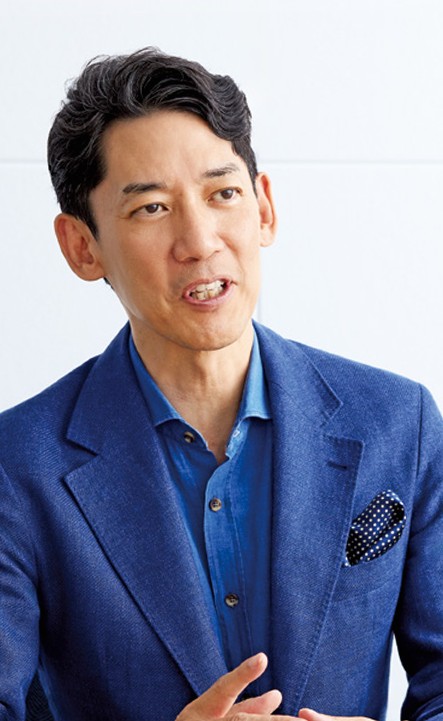
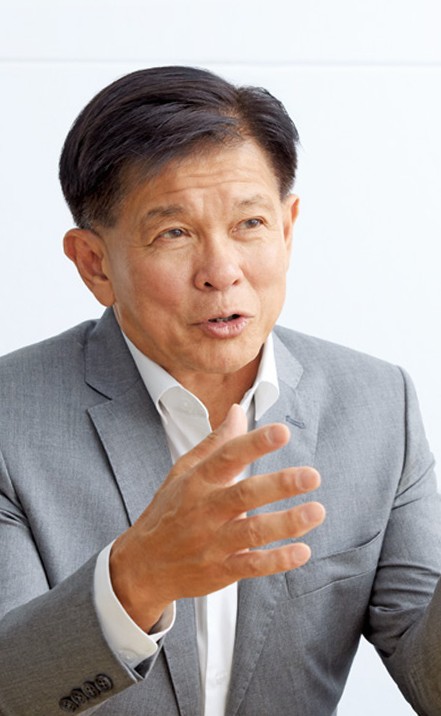
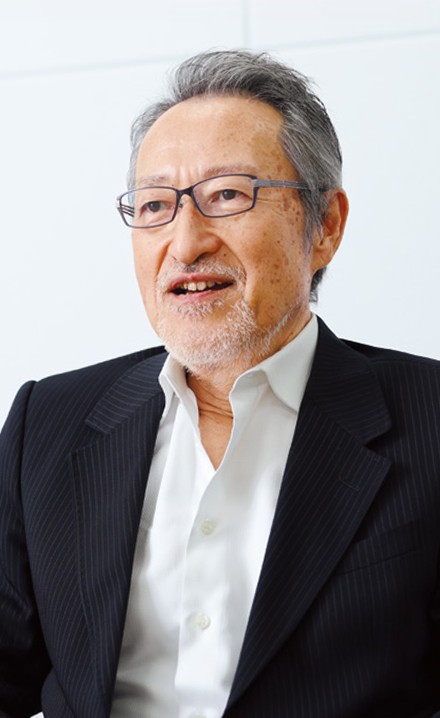
and Board ChairMasayoshi Nakamura
Executive Summary
Executive Summary
- 01
Share price in 2025: Despite record earnings in 2025, our share price did not fully reflect our growth and earnings quality, highlighting the need to address the disconnect between our business performance and market valuation.
- 02
Growth capability of existing businesses: Our existing businesses continued to gain market share and improve profitability even in a challenging environment. This demonstrates the replicability and sustainability of our earnings. At the same time, we believe we need to communicate this strength more effectively to the capital markets.
- 03
Business model: While some investors favor a pure-play paint model, we will continue expanding selectively into adjacent chemical fields to broaden growth opportunities while preserving business quality and discipline.
- 04
EPS Compounder: Our model—combining organic growth, disciplined M&A, strong cash generation, and decentralized management—supports sustained compounded EPS growth.
- 05
Growth rate vs. ROIC: We will continue improving ROIC, while prioritizing compounded EPS growth as the key driver of MSV, requiring clearer communication on the role and interpretation of each metric.
- 06
Share liquidity: Limited liquidity has affected share-price formation, index inclusion, and investor base expansion, making further improvement an important priority.
- 07
IR disclosure/dialogue: While our disclosures have been robust in quantity, our key strengths have not always been communicated with sufficient clarity. We therefore aim to strengthen investor dialogue by communicating more clearly our earnings quality, cash generation, and proven M&A track record.
01
Share price in 2025
Lead Independent Director
and Board ChairMasayoshi Nakamura
and Board ChairMasayoshi Nakamura
We delivered very strong results in 2025, with both revenue and operating profit reaching record highs. However, our share price did not perform as well as either the Nikkei Stock Average or the chemicals sector average. This shows that we still need to address the disconnect in how the equity market understands our business and growth potential.
Director
Representative Executive Officer & Co-PresidentWee Siew Kim
Representative Executive Officer & Co-PresidentWee Siew Kim
Even with weak global consumer sentiment, we achieved 10% growth in organic adjusted operating profit, improved margins, and increased market share in many regions through flexible management suited to local market conditions, including China. With the contribution from the AOC acquisition, consolidated adjusted operating profit rose 37% in 2025. We believe this clearly demonstrates the higher quality of our earnings.
Director
Representative Executive Officer & Co-PresidentYuichiro Wakatsuki
Representative Executive Officer & Co-PresidentYuichiro Wakatsuki
From early January to the end of December 2025, our share price rose 5%, underperforming both the Nikkei Stock Average at 28% and the chemicals sector average at 7%. Over the past three years or so, capital has increasingly concentrated in AI-related stocks. In this environment, investors have tended to focus their attention and capital on thematic sectors such as AI and semiconductors. Many investors perceive higher returns to be more readily achievable in these sectors than in the steady-growth paint and coatings industry.
02
Growth capability of existing businesses
Lead Independent Director
and Board ChairMasayoshi Nakamura
and Board ChairMasayoshi Nakamura
Valuation has been a regular topic at Board discussions over the past several years, and I believe concerns about China risk continue to weigh on our share price. This is despite NIPSEA China continuing to gain market share and increase profits, even through COVID-19 and the sharp rise in raw material costs. Operating profit margin also improved to around 15% in 2025.
China’s property market is clearly going through a difficult period. However, investors should not judge our China business only by daily news headlines. What is important is how NIPSEA China has responded to that environment and how the quality of its earnings has strengthened as a result.
Director
Representative Executive Officer & Co-PresidentWee Siew Kim
Representative Executive Officer & Co-PresidentWee Siew Kim
By “quality of earnings,” I mean the consistent and replicable accumulation of profits generated through core business operations, rather than one-off gains. We have built this earnings base not simply by benefiting from market growth. We achieved it by expanding into new segments, launching higher-value-added products, and steadily increasing market share. As a result, the China business today is very different from what it was in 2010. This reflects management’s ability to continue evolving ahead of the market, while also helping shape the market itself.
Our strength comes from both trust in people and the systems that support that trust. We give strong management teams the authority and resources they need, while growing together under the common objective of Maximization of Shareholder Value (MSV). This is what we mean by autonomous and decentralized management. It is not just a concept, but a management system built through long-term practice and proven results.
Lead Independent Director
and Board ChairMasayoshi Nakamura
and Board ChairMasayoshi Nakamura
Some investors have also questioned the sustainability of AOC, which we acquired in 2025, because it was previously owned by private equity and its recent revenue growth has been below the prior-year level. However, the Board’s view has not changed. We acquired AOC at an attractive valuation, brought in an excellent management team, and have seen it maintain high profitability over the past year. We believe this shows that its business system is functioning effectively.
Director
Representative Executive Officer & Co-PresidentWee Siew Kim
Representative Executive Officer & Co-PresidentWee Siew Kim
What attracted us to AOC was the strength of its management team and the track record it built over the more than five years before the acquisition. We were especially impressed by its ability to build a strong business system and execute it with discipline. This is a highly replicable system that works in practice and consistently drives growth. It has also become an advanced model that is setting the performance standard in adjacent industry sectors. While the construction market remains weak in the near term, we expect AOC to deliver mid-single-digit revenue growth over the medium term, supported by infrastructure demand and continued progress in expanding its business system in Europe.
Director
Representative Executive Officer & Co-PresidentYuichiro Wakatsuki
Representative Executive Officer & Co-PresidentYuichiro Wakatsuki
While some investors remain concerned about slower growth in our existing businesses, more attention is now being placed on the performance of NIPSEA Except China in Asia. This is natural, as the segment now exceeds NIPSEA China in revenue growth, profit growth, and contribution to consolidated earnings.
Director
Representative Executive Officer & Co-PresidentWee Siew Kim
Representative Executive Officer & Co-PresidentWee Siew Kim
The opportunity for organic growth through geographic expansion remains significant, not only for NIPSEA Except China but across broader regions as well. We pursue this in two ways. One is expanding from existing countries into neighboring markets. We usually begin through exports, build sufficient sales volume, and then establish a local presence as our understanding of the market deepens. The other is expansion through bolt-on acquisitions. In both cases, the key is enabling strong local talent to capture more opportunities and accelerate growth. The Türkiye Group is a leading example of this approach in practice.
03Business model
Business model
(Asset Assembler model vs. pure play)
Lead Independent Director
and Board ChairMasayoshi Nakamura
and Board ChairMasayoshi Nakamura
Another topic frequently discussed with investors is the strength of our business model. While our Asset Assembler model has delivered an outstanding track record of EPS growth, some investors still prefer a pure-play paint and coatings company model.
Director
Representative Executive Officer & Co-PresidentYuichiro Wakatsuki
Representative Executive Officer & Co-PresidentYuichiro Wakatsuki
Part of the reason is that the strengths of the Asset Assembler model are not yet fully understood. More broadly, some investors may see it as becoming a conglomerate and therefore associate it with lower capital efficiency and profitability. In reality, our M&A activities are strictly focused on chemical fields where we have deep knowledge and expertise, and we apply disciplined acquisition criteria. We target businesses with high asset efficiency, reflected in measures such as RNOA (Return on Net Operating Assets), as well as strong cash generation, while maintaining overall business quality.
Director
Representative Executive Officer & Co-PresidentWee Siew Kim
Representative Executive Officer & Co-PresidentWee Siew Kim
Our decision to expand into adjacent areas reflects a long-term perspective. If we continue to succeed in paint and coatings, opportunities for bolt-on M&A may eventually become more limited due to competition law constraints. We also expect market growth to moderate as the industry matures. Against this backdrop, our goal is to sustain growth and profitability by building new growth engines. In doing so, we will leverage the brands, distribution networks, innovation capabilities, and strong management teams we have built through our paint and coatings business.
04
EPS Compounder
Lead Independent Director
and Board ChairMasayoshi Nakamura
and Board ChairMasayoshi Nakamura
In 2025, the Board held a dialogue session with overseas investors. Their evaluation of our Company focused on three strengths: the strong competitive position of our businesses, the quality of management teams across regions, and the Board’s discipline in capital allocation. In particular, they focused on companies that can deliver long-term compounded EPS growth through high-quality M&A, so-called “EPS Compounders.”
Director
Representative Executive Officer & Co-PresidentYuichiro Wakatsuki
Representative Executive Officer & Co-PresidentYuichiro Wakatsuki
In general, EPS Compounders share several common characteristics: (1) two highly profitable growth drivers, organic and inorganic growth, (2) strong cash generation and the ability to reinvest at high returns, (3) an autonomous and decentralized business model, (4) the capability to source and execute acquisitions at attractive valuations, (5) exposure to a broad portfolio of small and midsized private companies across multiple end markets, and (6) management teams with strong capital allocation discipline.
Lead Independent Director
and Board ChairMasayoshi Nakamura
and Board ChairMasayoshi Nakamura
In our Board discussions, we analyzed several EPS Compounders and found that many share an autonomous and decentralized organizational model. Customer relationships and day-to-day operational decisions are entrusted to subsidiary management, allowing acquired companies to maintain their entrepreneurial independence. Another common characteristic is a lean headquarters organization focused mainly on capital allocation and close performance monitoring.
Director
Representative Executive Officer & Co-PresidentWee Siew Kim
Representative Executive Officer & Co-PresidentWee Siew Kim
I strongly relate to a comment made by the CEO of one EPS Compounder: “It’s really difficult for some people to understand what decentralization is because they’ve never experienced that, so they ask about synergies all the time. And it’s very difficult to tell them we don’t care about synergies. If they come, they come, but it’s not why we invest in the company. We buy good businesses.”
That said, our approach also has its own characteristics. In bolt-on M&A, synergies are an important consideration. In asset assembly transactions, however, we do not factor synergies into the acquisition price. We are highly selective and invest only in high-quality opportunities that can generate sufficiently attractive returns on a standalone basis. After acquisition, of course, we actively pursue synergies by leveraging our Group platform.
Director
Representative Executive Officer & Co-PresidentYuichiro Wakatsuki
Representative Executive Officer & Co-PresidentYuichiro Wakatsuki
Recently, overseas investors have suggested that our management model may be similar to that of Danaher in the United States. Danaher Business System (DBS) has its roots in the Japanese kaizen concept of the Toyota Production System. It is more than a method for operational improvement; it serves as an integration platform for rapidly transforming acquired companies into efficient Danaher-style organizations. Our Asset Assembler model, by contrast, is an autonomous and decentralized platform that allows acquired companies to use management resources from across the Group to accelerate growth, with headquarters providing support. The approaches differ, but both are platforms designed to make acquired companies better businesses.
Lead Independent Director
and Board ChairMasayoshi Nakamura
and Board ChairMasayoshi Nakamura
Yes, there are certainly similarities between Danaher and our Company. At the same time, our Board also discussed that Danaher is an outstanding example of an EPS Compounder, having created long-term value through M&A and business improvement. However, part of the reason for its high valuation was its eventual shift to a pure-play life sciences company. In that respect, it may not be a fully comparable benchmark for our Company, which continues to operate in chemicals and adjacencies fields as well.
05Business model
Business model
(Growth rate vs. ROIC)
Lead Independent Director
and Board ChairMasayoshi Nakamura
and Board ChairMasayoshi Nakamura
A key topic in our Board discussions was whether investors place greater importance on growth or on ROIC, as views differ across the investor base. At our Company, EPS growth remains our highest-priority indicator. In pursuing growth, we will continue improving the profitability of acquired businesses and generating returns above WACC. However, ROIC itself is not our ultimate objective. We concluded that continuing to deliver compounded EPS growth through the Asset Assembler model is what best contributes to MSV.
Director
Representative Executive Officer & Co-PresidentYuichiro Wakatsuki
Representative Executive Officer & Co-PresidentYuichiro Wakatsuki
Correlation analyses we regularly use in our discussions show that both revenue growth and ROIC have relatively strong correlations with PER. More specifically, compared with peers, we can be viewed as trading at a discount in terms of revenue growth versus PER, while trading at a premium in terms of ROIC versus PER.
One reason we appear to trade at a premium on ROIC versus PER is that our management model is more active in M&A than those of our peers. The resulting increase in goodwill affects reported ROIC. We may argue that such comparisons are not apples-to-apples, but the reality is that investors do not always examine the accounting details to that extent.
Lead Independent Director
and Board ChairMasayoshi Nakamura
and Board ChairMasayoshi Nakamura
Our dilemma is twofold. First, our ability to secure substantial funding at low cost is not fully recognized as a competitive advantage. Second, when we use that advantage to expand through acquisitions and achieve compounded EPS growth, capital efficiency can appear lower because of accounting treatment, particularly goodwill.
Director
Representative Executive Officer & Co-PresidentYuichiro Wakatsuki
Representative Executive Officer & Co-PresidentYuichiro Wakatsuki
As Mr. Nakamura mentioned earlier, we will continue to monitor ROIC closely as an important management indicator. At the same time, some investors view RNOA as a measure that better reflects the actual efficiency of the business, without being heavily affected by accounting factors. We therefore intend to further improve our communication so that investors can better understand the strong asset efficiency and cash-generating capabilities of both our existing businesses and acquired companies.
06
Share liquidity
Lead Independent Director
and Board ChairMasayoshi Nakamura
and Board ChairMasayoshi Nakamura
Our recent weak share-price performance is not driven only by earnings factors. Low daily trading value also makes price formation less stable. Average daily trading value is around ¥4 billion. Although this has improved, it remains low for a large-cap company. Limited liquidity makes it more difficult for large, long-term institutional investors to build positions and may also make the stock more vulnerable to short selling.
Director
Representative Executive Officer & Co-PresidentYuichiro Wakatsuki
Representative Executive Officer & Co-PresidentYuichiro Wakatsuki
Limited liquidity also reduces our opportunities for inclusion in major indices such as the Nikkei Stock Average. Inclusion generally requires daily trading value of approximately ¥9.0–9.5 billion, and current trading levels fall short of that threshold. As a result, we are unable to benefit from the passive inflows associated with index inclusion. More importantly, this issue goes beyond lower trading activity in our shares. If low liquidity and a weak share price continue for an extended period, they could eventually affect our future M&A strategy itself.
Lead Independent Director
and Board ChairMasayoshi Nakamura
and Board ChairMasayoshi Nakamura
Broadening our investor base is also essential for improving liquidity. Historically, many of our shareholders have been investors focused primarily on the paint and chemicals sector, but we believe there are limitations to relying solely on that investor base.
Director
Representative Executive Officer & Co-PresidentYuichiro Wakatsuki
Representative Executive Officer & Co-PresidentYuichiro Wakatsuki
In our investor outreach efforts, we have shifted our focus from the traditional chemicals and paints investor base to investors focused on EPS Compounders. In fact, some European investors have told us that they agreed to meet with us specifically because Nippon Paint is viewed as an EPS Compounder. We therefore intend to continue strengthening our overseas IR activities. At the same time, we will increase our outreach to domestic retail investors, as well as technical and quantitative hedge funds. Through these efforts, we aim to broaden investor perception of our Company from that of a paint manufacturer to that of a company capable of delivering compounded EPS growth through superior capital allocation.
07
IR disclosure/dialogue
Lead Independent Director
and Board ChairMasayoshi Nakamura
and Board ChairMasayoshi Nakamura
What is important is that the liquidity issue does not exist independently. It is closely connected to our disclosures and to how investors perceive our Company. We therefore believe several areas of our disclosure need improvement. First, our disclosures are often so detailed that our key strengths are not always communicated clearly. Second, investor attention can become overly focused on specific figures, such as NIPSEA China or AOC revenue growth. Third, our ability to deliver compounded growth and strong cash generation through M&A is still not fully understood.
Director
Representative Executive Officer & Co-PresidentYuichiro Wakatsuki
Representative Executive Officer & Co-PresidentYuichiro Wakatsuki
We have upgraded our IR materials starting with our third-quarter 2025 results. To help investors better understand our underlying earnings power through historical trends, we updated the way we present our information. We sharpened our headlines and introduced adjusted operating profit and adjusted EPS to better highlight our cash-generating capability. We also presented our organic and inorganic growth track record in a single view. At IR DAY in November 2025, in addition to AOC, we provided the latest update on NIPSEA from Mr. Wee, together with an explanation of our M&A strategy. We also held an investor tour and CTO session at the Tokyo Innovation Center in October 2025, to demonstrate that our strengths extend beyond brand and distribution and also include strong technological capabilities.
Director
Representative Executive Officer & Co-PresidentWee Siew Kim
Representative Executive Officer & Co-PresidentWee Siew Kim
As part of our IR initiatives, we are also considering an investor tour in China in 2026. It is difficult for investors to fully understand the strength of NIPSEA China’s brands and distribution network through verbal explanation alone. We therefore plan to provide opportunities for direct dialogue with the local management team and distributors, together with site visits, so that investors can experience firsthand the strength of our operations on the ground.
Director
Representative Executive Officer & Co-PresidentYuichiro Wakatsuki
Representative Executive Officer & Co-PresidentYuichiro Wakatsuki
After considering these factors, we also executed share repurchases starting in October 2025. The rationale was fourfold: first, to send a clear signal that we believed our share price was significantly undervalued; second, to increase actual buying interest in the market; third, to discourage short selling; and fourth, to demonstrate the strength of our cash-generating capability. Ultimately, we concluded that repurchasing our shares at this PER was justified as a financial decision based on our view of future EPS growth. While it did not lead to a sharp rise in the share price, we believe buying back our shares at undervalued levels was sound capital allocation. From a medium- to long-term perspective, we believe this contributes to MSV. At the same time, the primary focus of our capital allocation strategy remains M&A that contributes to MSV, and we will continue pursuing such opportunities.
08
Reflecting on the roundtable
Lead Independent Director
and Board ChairMasayoshi Nakamura
and Board ChairMasayoshi Nakamura
Today’s discussion reinforced my view that the fundamental challenge facing our Company is that the market does not yet fully appreciate the strength of our businesses or the replicability of our growth. The quality of earnings in our existing businesses, compounded EPS growth under the Asset Assembler model, and disciplined capital allocation are all core foundations supporting MSV.
At the same time, we believe there is still room for improvement in several areas. These include liquidity, how we present our disclosures, and the way we engage with investors. We must continue improving each of these areas steadily. As a Board, we will continue deepening our dialogue with management and fully carrying out our responsibilities in narrowing the gap between intrinsic value and market valuation as we work toward MSV. Thank you for this valuable discussion.